1
Submit product data
Request your quote online or via email. We will review the drawings and technical details of your inquiry.
Service overview
To optimally round off the production of your parts or assemblies, we offer you all finishing and post-processing services. We have state-of-the-art machines and techniques at our disposal. This gives us maximum control and guarantees the highest quality standards throughout the entire production process.
Whether products are made of metal or plastic - we offer the right post-processing for every option in order to manufacture the product exactly to your requirements. Below you will find tables from which you can find further information on the various finishing processes and their specifications.
Our ordering process is extremely straightforward. Simply upload your drawings or send them by e-mail. You will usually receive your personalized quote the very next day.
Process
A clear flow, one point of contact, and a well-coordinated manufacturing process.
Request your quote online or via email. We will review the drawings and technical details of your inquiry.
If desired, we will get back to you with design-for-manufacturing tips. In collaboration with you, we assist in achieving the best manufacturable solution.
As soon as the final design has been determined, we will send you a final quote for your order.
assemblean takes care of the entire manufacturing process, conducts quality control, and delivers the parts to the desired destination.
Materials
We can post-treat numerous metals and plastics with our various finishing processes. Find out more about the details of our materials.
Related resources
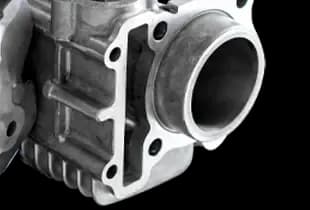
Die casting explained: processes, materials, and tradeoffs for serial metal parts in aluminium, zinc, and magnesium.
Read more→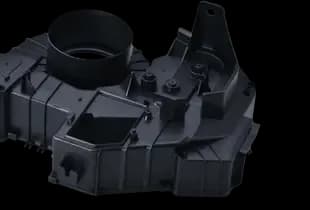
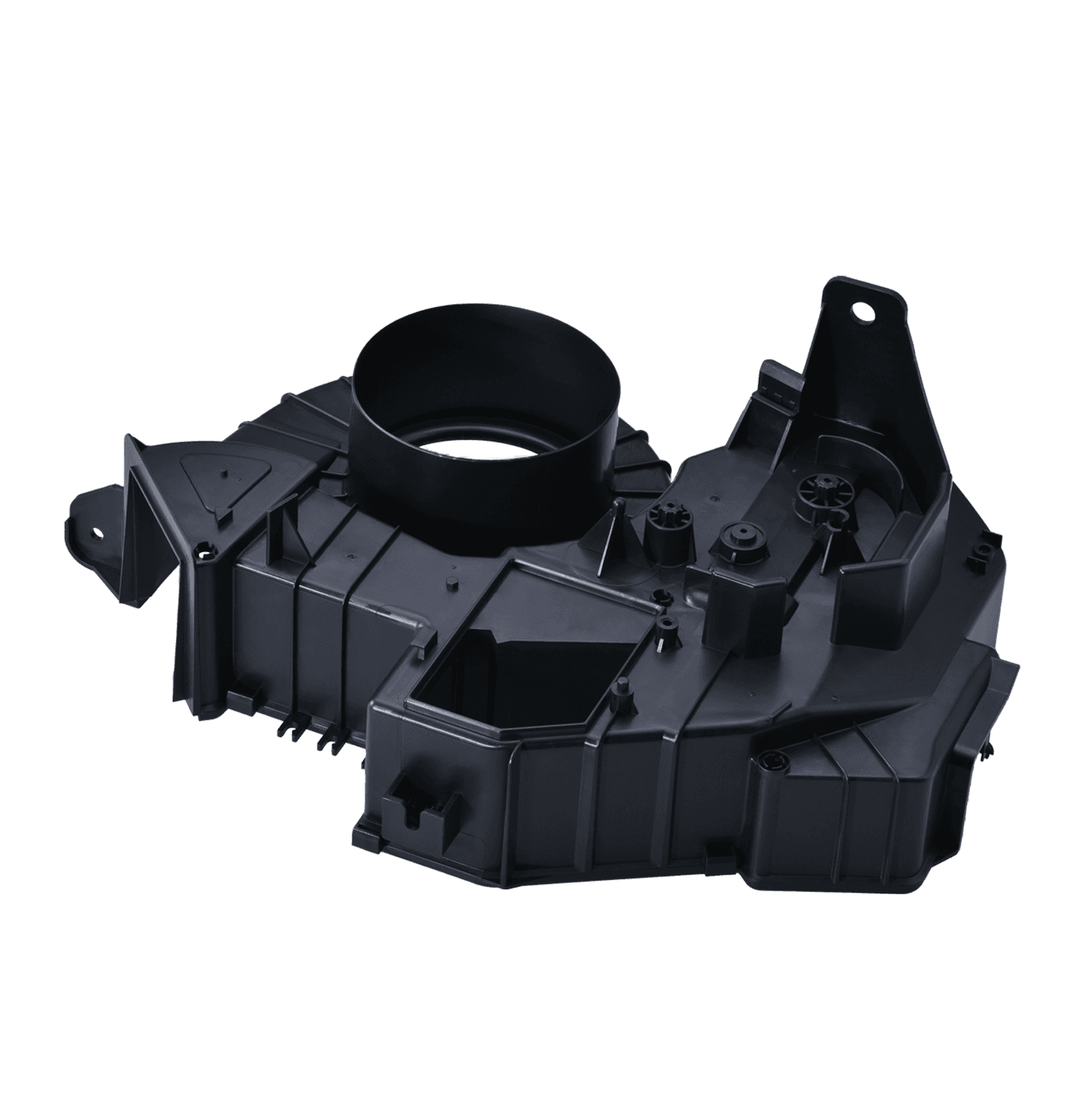
Injection moulding explained: process, materials, and economics for precise plastic parts from pilot runs to volume production.
Read more→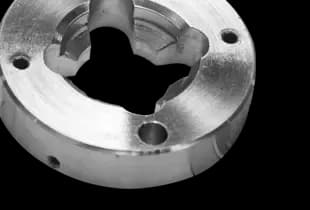
CNC milling, turning, mill-turn, and drilling from prototypes to production in metals and plastics.
Read more→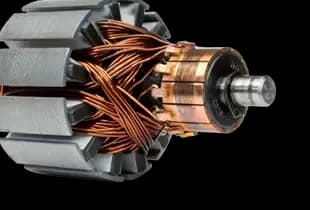
Mechanical and mechatronic assemblies using joining technologies from manual to automated workflows.
Read more→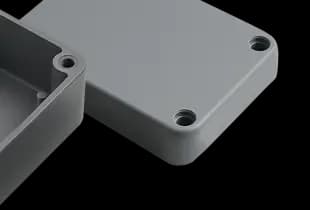
Fast and cost-efficient production of high-quality plastic parts without expensive tooling.
Read more→Trusted by


Book a personal meeting
Contact us now
The state-of-the-art manufacturing techniques CNC-milling and CNC-turning offer precision, repeatibility and consistency. CNC-milling involves computer-assisted machines to remove material from a workpiece. CNC turning turns a workpiece on a turning […]
The manufacturing processes of injection molding and die casting are widely used in the production of parts. In order to choose the right process for your products, you should know […]

Developing a physical product is not that easy. Which components need to be taken into account when brainstorming? Which manufacturer is the right one? Is it worth realizing the idea […]
© assemblean 2026 | All rights reserved.
Chemical burnishing (also known as darkening or browning) describes a finishing process that is mainly used in combination with fats and oils to create protection against corrosion.
As with anodizing, the protection is created without the application of a layer, but through transformation. Burnishing typically produces a matt, dark brown to black surface, which is also very homogeneous and resistant to bending and abrasion.
In addition to its functional properties, this surface treatment is also often used for decorative purposes, as it can give workpieces a dark matt antique look. Suitable materials: Steel, Stainless steel
Items 1–1 of 9
Hardening is particularly useful for aluminum alloys if the hardness and strength are to be increased. During hardening, the workpiece is first heated, adjusted and then quenched in the next step. The improved properties are fixed through rapid cooling and finally removed. Suitable materials: Aluminium
Items 1–1 of 7
Anodizing (electrical oxidation of aluminium) describes the manufacturing process in which an oxidic protective layer is created on an aluminium workpiece. In contrast to other protective layers, e.g. using electroplating technology, anodizing does not apply any additional material to the base aluminium, but instead converts the top layer of the aluminium into an oxide using direct current.
This results in a thin layer that protects against corrosion and is highly resistant to weathering. An anodizing process can also be used for colouring, which means that anodizing can also be used for decorative purposes. Suitable materials: Aluminium
Items 1–1 of 6