
Clear assignment
Documents are clearly assigned to the order, line item, or lot.
Quality documentation
During ordering and production there are many inspections and documentation steps to ensure quality standards and transparency. Because this documentation landscape can become confusing quickly, we give you an overview of the documents we can provide - some mandatory, some available on request.
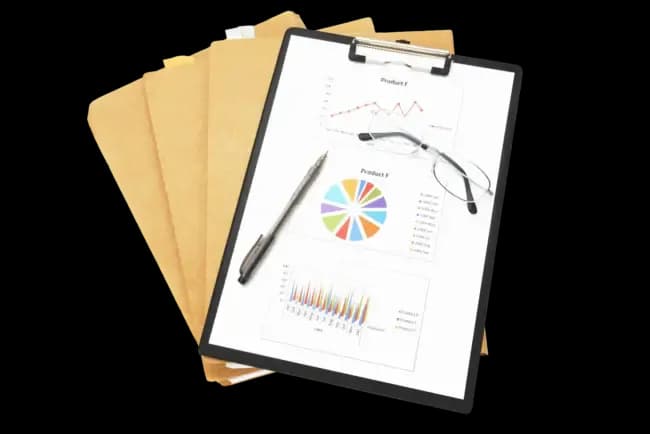
To guarantee the quality of manufactured parts, requirements are verified through suitable inspection methods and clear documentation. Documentation accompanies the full production process and includes information from drawings, specifications, purchase orders, and industry or mandatory standards such as ISO certifications and ISO norms.
Documents are clearly assigned to the order, line item, or lot.
It remains transparent which characteristics were checked and to what extent.
Measurement results, material evidence, and conformity confirmations stay documented in a structured way.
Creation, review, release, and archiving follow controlled and traceable rules - partly automated through our digital manufacturing platform.
The overview below helps classify the main document types. Details on individual documents are covered in the next sections.
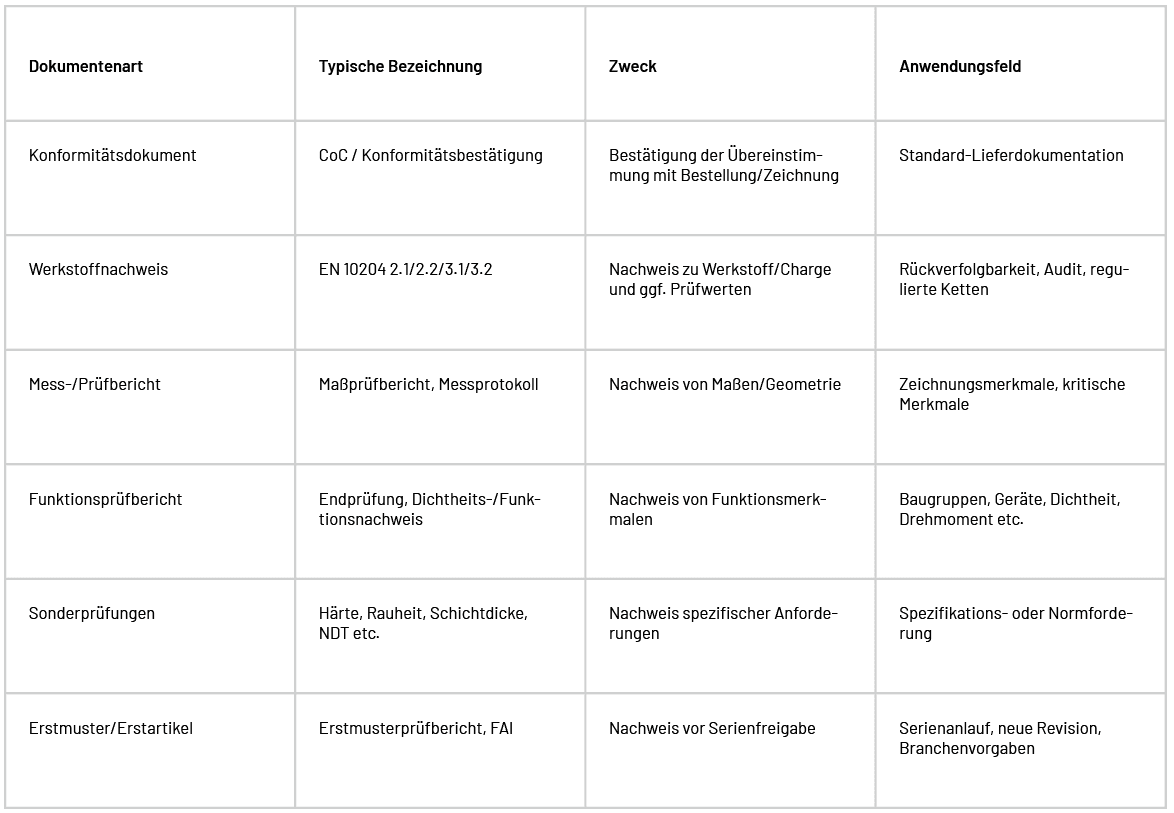
EN 10204
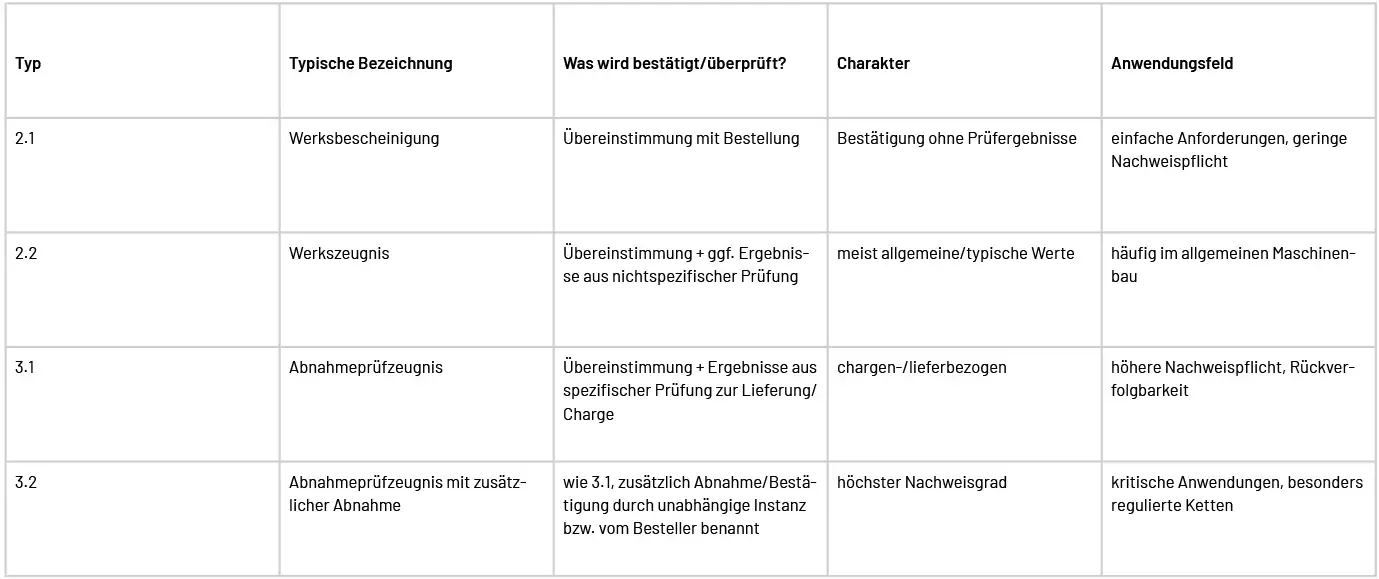
Material certificates according to EN 10204 mainly differ in two ways.
Whether the inspections are non-specific, meaning they describe typical values, or specific to the actual delivery or batch.
Who confirms the document - internally by the manufacturer or additionally with independent acceptance.
When a part is new, receives a revision, or moves into serial ramp-up, a normal final inspection is often not enough. In such cases, a first article inspection is performed. First articles are parts manufactured for the first time under realistic serial conditions.
This does not only refer to the part itself, but to a representative production run that reflects the future serial state. First article submission therefore usually includes both the product and the production process.
A first article comes from an initial production batch under serial conditions. For the submission process, a quantity agreed in advance with the customer is released from that batch.
A representative serial run means production takes place at the final manufacturing location, runs over a realistic time interval, covers a defined customer quantity, and is completed entirely under serial conditions.
First article inspection is the basis for serial release and further production. It is meant to prevent production issues early and verify whether agreements between customer and supplier are being met.
All relevant information is documented in the first article inspection report. It is standard practice during submission and serves as the basis for alignment and approval.
A new submission may be required if the product or manufacturing process changes or if there were relevant changes in the production flow. In such cases a renewed customer approval is often necessary.
In principle, the first article submission should happen only once all final details are fixed in order to avoid extra loops and effort.
During project alignment it is usually defined how extensive the first article inspection should be and at which point it takes place.
Especially for formal requirements - for example in automotive or aerospace - it helps to define standards, inspection scope, and templates early.
assemblean manages smooth document control and delivery, both digitally and in paper form. To create the requested documentation successfully and keep traceability intact, the following information should be clarified during project setup:
Drawing number and revision
Specification and standards
Required document scope
Inspection scope: sampling or 100%
Language and format
Traceability requirements (supply chain law)
Trusted by


© assemblean 2026 | All rights reserved.
Book a personal meeting
Contact us now