Dictionary
BlankDictionary
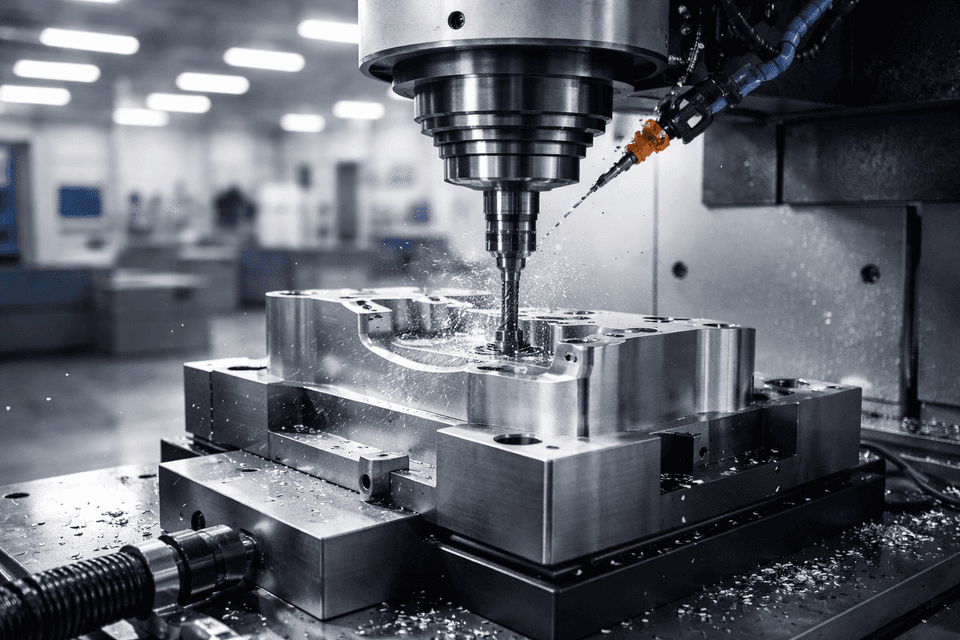
EnglishShort definitionSubtractive manufacturing refers to a manufacturing process in which material is removed from a blank using various techniques such as turning, milling or drilling to form the desired end product. This process is widely used in the metal, plastics and wood industries. It enables the precise production of complex components with tight tolerances and high surface quality. Subtractive manufacturing is essential for series production, prototyping and customization in manufacturing technology. By using modern CNC machines (computerized numerical control), efficiency and accuracy can be further increased, making companies more competitive.

Dictionary
BlankA blank is a semi-finished product that is created after the primary machining process and serves as the starting material for further production. In industrial production, the blank forms the basis for various downstream processing steps such as machining, shaping or surface treatment. Blanks can come in different shapes and materials, for example as metal ingots, plastic granules or blocks of wood, depending on the desired end product. The quality and precision of the blank are crucial for the efficiency and accuracy of the subsequent production steps, as they form the basis for the dimensional accuracy and technical properties of the finished product. By using standardized blanks, production processes can be optimized and costs reduced, thereby increasing competitiveness in the manufacturing industry.
Dictionary
WorkpieceIn manufacturing, a workpiece refers to the basic blank or starting material that is shaped using various machining processes such as turning, milling or grinding. It forms the basis for the manufacture of an end product and can comprise metal, plastic or other materials. Workpieces are manufactured precisely according to technical drawings and specifications in order to achieve the desired dimensions and properties. The quality and accuracy of the workpiece is crucial for the functionality and durability of the finished product. In industry, the efficient machining of workpieces enables high production quality and contributes to the optimization of manufacturing processes.
Dictionary
Cutting toolThe cutting tool is a special type of tool that is required for cutting, dividing or machining a workpiece. It is particularly needed in various CNC processes such as turning, milling or drilling. Cutting tools are usually made of hard materials such as steel or diamond to improve precision and tool life. This is particularly important when the workpieces themselves are made of hard materials. The choice of the right cutting tool depends on various factors, such as the material hardness, surface quality or type of machining.
Dictionary
Surface qualityThe surface quality includes all properties and the quality of a component's surface. For example, roughness, waviness and density are taken into account. The surface quality can be measured using methods such as stylus devices and optical methods and specified in micrometers (µm). The higher the surface quality, the smoother and more uniform the surface. The surface quality is primarily determined when high demands are placed on the functionality of the surface or on optical components.
Dictionary
Additive manufacturingAdditive manufacturing is an innovative manufacturing process in which material is added layer by layer to create three-dimensional objects. This approach enables the production of complex geometries and customized components that are often not feasible with traditional manufacturing methods. In industry, additive manufacturing is used to create prototypes quickly, shorten production times and increase material efficiency. It also offers flexibility for design adjustments without additional tooling costs, making development and production more agile. By reducing waste and optimizing the use of materials, additive manufacturing contributes to sustainable production and strengthens the competitiveness of companies in a wide range of industries.
Dictionary
cavityIn modern mechanical engineering, the production of precise and high-quality components plays a central role. One of the key technologies for manufacturing such components is injection molding, a process that is used in numerous industries from automotive to medical technology. An essential part of this process is the cavity in the injection molding tool. But what exactly is behind this concept, and what is the importance of the cavity for the quality and efficiency of production? This article provides a comprehensive insight into the world of cavities in mechanical engineering, explaining their function, design and practical applications, as well as future developments in this field.
© assemblean 2026 | All rights reserved.