Dictionary
Surface roughnessDictionary
EnglishShort definitionThe surface quality includes all properties and the quality of a component's surface. For example, roughness, waviness and density are taken into account. The surface quality can be measured using methods such as stylus devices and optical methods and specified in micrometers (µm). The higher the surface quality, the smoother and more uniform the surface. The surface quality is primarily determined when high demands are placed on the functionality of the surface or on optical components.
Dictionary
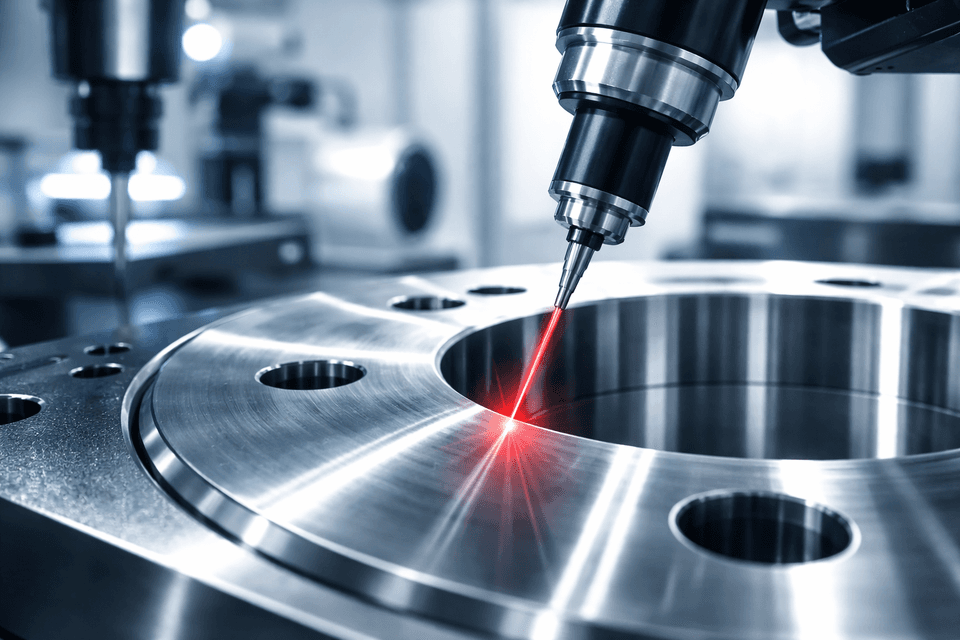
Surface roughnessSurface roughness measures the unevenness and texture of a surface at the smallest level. It is mainly measured by the height differences on the surface and is given in micrometers (µm). The mechanical properties strongly depend on the surface roughness as it influences friction, wear and functionality. Therefore, choosing the right surface roughness is also important for manufacturing processes such as CNC machining. The roughness is often improved by various finishing processes such as grinding and polishing.
Dictionary
Nesting (optimization)Nesting is a type of optimization in sheet metal processing. Nesting involves arranging multiple parts on a single sheet as closely as possible in order to minimize material waste and thus the waste of resources. By using special nesting software, DXF files can be created to maximize the use of material. When arranging the parts on a single sheet, many parameters such as part geometry, cutting paths and machine thickness must be taken into account in order to achieve a real difference in resource utilization and costs.
Dictionary
Subtractive manufacturingSubtractive manufacturing refers to a manufacturing process in which material is removed from a blank using various techniques such as turning, milling or drilling to form the desired end product. This process is widely used in the metal, plastics and wood industries. It enables the precise production of complex components with tight tolerances and high surface quality. Subtractive manufacturing is essential for series production, prototyping and customization in manufacturing technology. By using modern CNC machines (computerized numerical control), efficiency and accuracy can be further increased, making companies more competitive.
Dictionary
BlankA blank is a semi-finished product that is created after the primary machining process and serves as the starting material for further production. In industrial production, the blank forms the basis for various downstream processing steps such as machining, shaping or surface treatment. Blanks can come in different shapes and materials, for example as metal ingots, plastic granules or blocks of wood, depending on the desired end product. The quality and precision of the blank are crucial for the efficiency and accuracy of the subsequent production steps, as they form the basis for the dimensional accuracy and technical properties of the finished product. By using standardized blanks, production processes can be optimized and costs reduced, thereby increasing competitiveness in the manufacturing industry.
Dictionary
Feed rateThe feed rate is the speed at which a component is moved along the machining axis during CNC machining such as turning, milling or drilling. The feed rate is usually measured in millimetres per minute (mm/min) or millimetres per revolution (mm/rev). Adapting the feed rate to the material is crucial to ensure high quality machining and optimum machine service life. As a rule, the harder the material, the lower the feed rate, as otherwise there will be high wear and poor surface quality.
Dictionary
MachinabilityMachinability describes the suitability of a material to be machined using CNC production processes such as turning, milling or drilling. Many mechanical properties, such as hardness, toughness or thermal conductivity, influence the machinability of a material. The higher the machinability of a material, the easier it is to machine, which in turn has a positive effect on wear and production costs. Machinability is therefore one of the most important parameters in the production of workpieces and components.
© assemblean 2026 | All rights reserved.