Dictionary
Dictionary
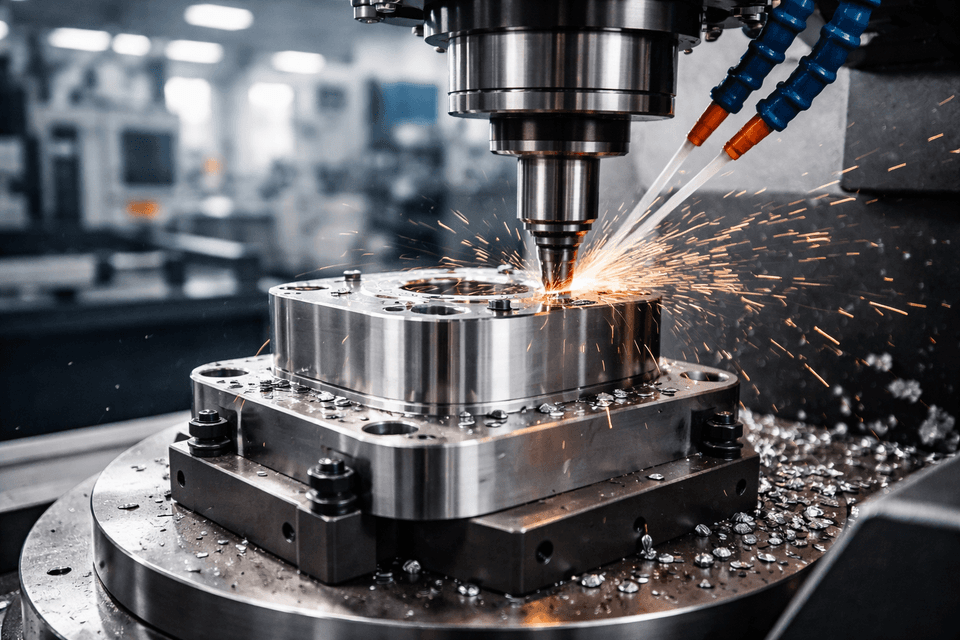
EnglishShort definitionIn manufacturing, a workpiece refers to the basic blank or starting material that is shaped using various machining processes such as turning, milling or grinding. It forms the basis for the manufacture of an end product and can comprise metal, plastic or other materials. Workpieces are manufactured precisely according to technical drawings and specifications in order to achieve the desired dimensions and properties. The quality and accuracy of the workpiece is crucial for the functionality and durability of the finished product. In industry, the efficient machining of workpieces enables high production quality and contributes to the optimization of manufacturing processes.

Dictionary
A blank is a semi-finished product that is created after the primary machining process and serves as the starting material for further production. In industrial production, the blank forms the basis for various downstream processing steps such as machining, shaping or surface treatment. Blanks can come in different shapes and materials, for example as metal ingots, plastic granules or blocks of wood, depending on the desired end product. The quality and precision of the blank are crucial for the efficiency and accuracy of the subsequent production steps, as they form the basis for the dimensional accuracy and technical properties of the finished product. By using standardized blanks, production processes can be optimized and costs reduced, thereby increasing competitiveness in the manufacturing industry.
Dictionary
Cutting toolThe cutting tool is a special type of tool that is required for cutting, dividing or machining a workpiece. It is particularly needed in various CNC processes such as turning, milling or drilling. Cutting tools are usually made of hard materials such as steel or diamond to improve precision and tool life. This is particularly important when the workpieces themselves are made of hard materials. The choice of the right cutting tool depends on various factors, such as the material hardness, surface quality or type of machining.
Dictionary
Subtractive manufacturingSubtractive manufacturing refers to a manufacturing process in which material is removed from a blank using various techniques such as turning, milling or drilling to form the desired end product. This process is widely used in the metal, plastics and wood industries. It enables the precise production of complex components with tight tolerances and high surface quality. Subtractive manufacturing is essential for series production, prototyping and customization in manufacturing technology. By using modern CNC machines (computerized numerical control), efficiency and accuracy can be further increased, making companies more competitive.
Dictionary
Nesting (optimization)Nesting is a type of optimization in sheet metal processing. Nesting involves arranging multiple parts on a single sheet as closely as possible in order to minimize material waste and thus the waste of resources. By using special nesting software, DXF files can be created to maximize the use of material. When arranging the parts on a single sheet, many parameters such as part geometry, cutting paths and machine thickness must be taken into account in order to achieve a real difference in resource utilization and costs.
Dictionary
Injection MoldingInjection molding is a manufacturing process in which molten material - usually plastic or metal - is injected into a mould or tool under high pressure. This process is mainly used in plastics and metal processing to produce precise and complex components in large quantities. Injection allows detailed shapes to be produced with tight tolerances and consistent quality, which is essential for series production. The technology enables efficient production processes, reduced material waste and quick changeover between different product variants. In industry, injection plays a central role in the production of components for the automotive, electronics, consumer goods and many other sectors. The optimization of the injection process contributes significantly to the competitiveness and innovative capacity of manufacturing companies.
Dictionary
Injection molding parametersInjection molding parameters are the specific settings and conditions that are defined in the injection molding process to control the production of plastic parts. These include die and plastic temperatures, injection pressure, injection speed, dwell time and cooling times. The precise setting of these parameters is crucial for the quality and consistency of the parts produced, as they influence factors such as surface quality, dimensional accuracy and material properties. In practice, optimally tuned injection moulding parameters enable efficient production, reduce scrap rates and improve material utilization. They are therefore of great importance both from an academic perspective and in industry in order to produce competitive and high-quality plastic products.
© assemblean 2026 | All rights reserved.