Detail
Weldability
S235JR offers excellent weldability and can be welded with all standard welding processes. This makes it suitable for a wide range of applications. Preheating is usually not required and the risk of cracking is very low. Weld seams can be machined after welding and the steel retains good surface quality.
Detail
Machining
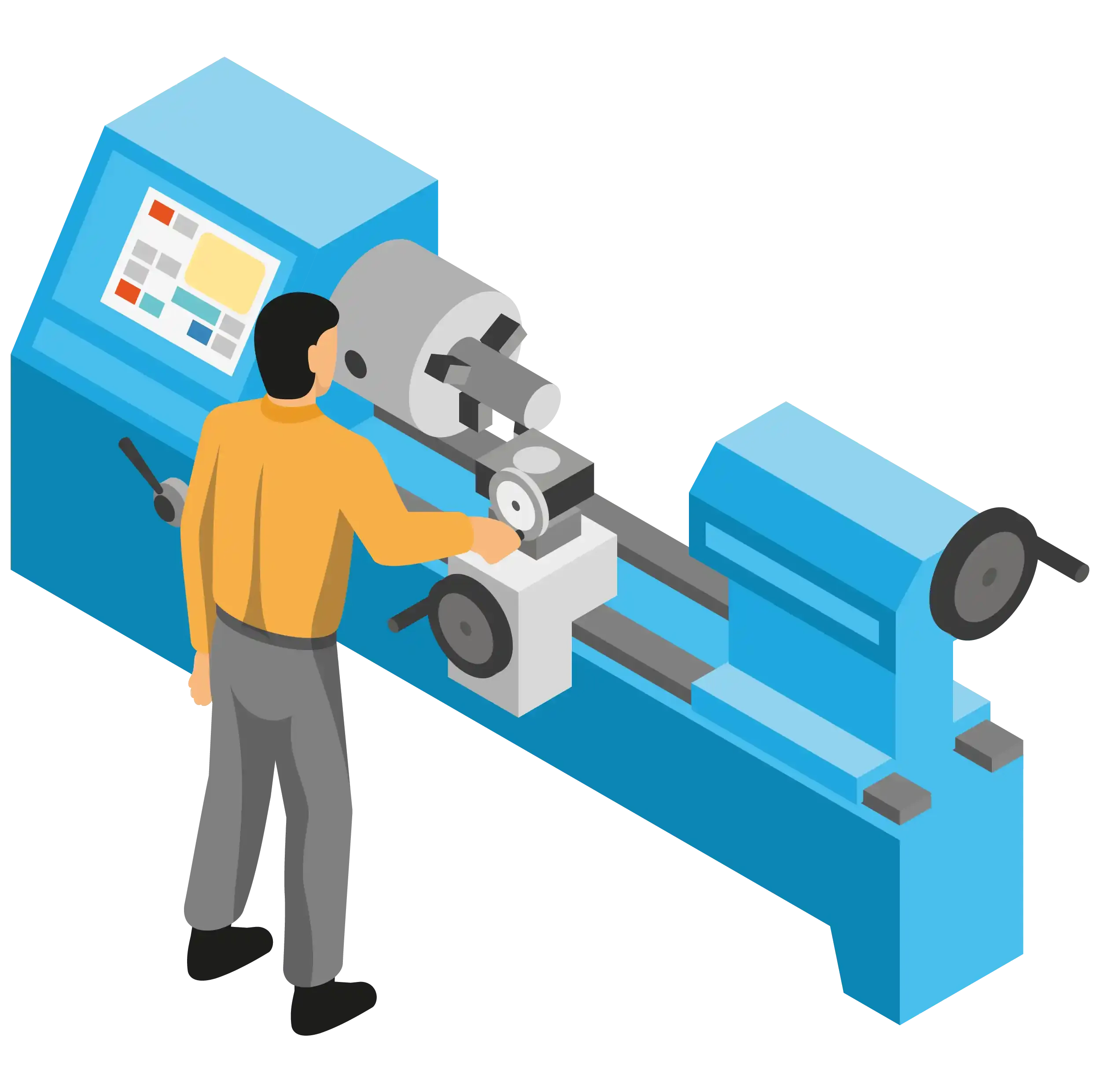
With its moderate hardness, S235JR is not overly hard and is easy to machine. Standard HSS or carbide tools are suitable. Tool wear with carbide can be reduced by optimising cutting parameters (e.g. cutting speeds in the range of 80 to 180 m/min) and by using cutting fluids. Coolants also reduce friction and improve surface finish.
Detail
Forgeability
S235JR has good forgeability. The recommended forging temperature range is 1050°C to 1250°C. The material is also well suited for subsequent processes such as machining, drilling, milling and welding. Although S235JR is generally resistant to cracking, proper temperatures should be maintained and rapid cooling avoided.