Dictionary
HardeningDictionary
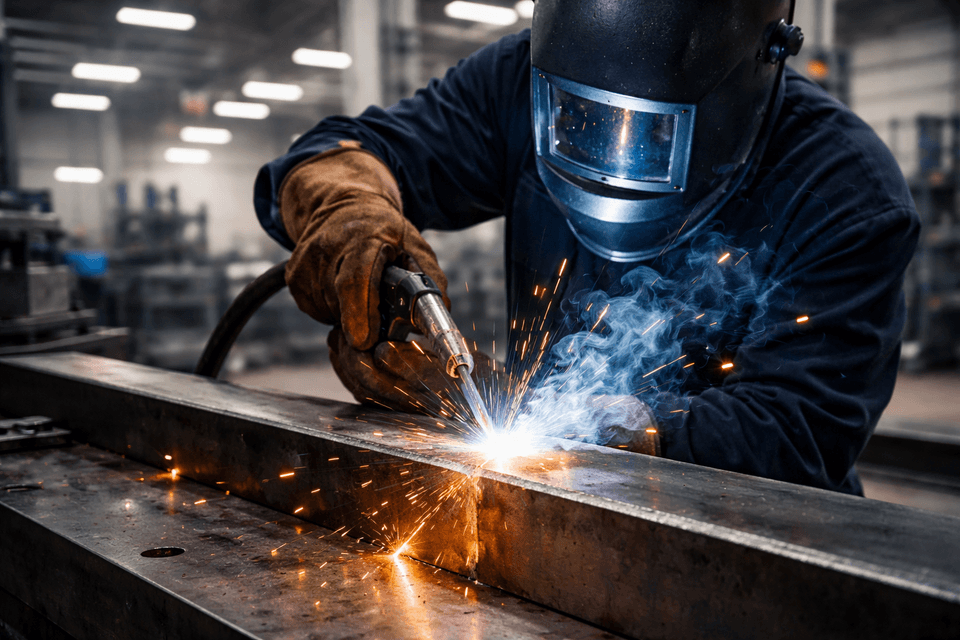
EnglishShort definitionThe weldability of a material is its ability to be permanently joined by one of the welding processes. The material is particularly suitable if there are no subsequent restrictions in terms of mechanical or physical properties, especially at the weld seam. Many types of steel and aluminum, for example, are very suitable for welding as they have a favorable chemical composition as well as a good microstructure and thermal resistance. Good weldability is important for joining several components in the long term

Dictionary
HardeningHardening refers to the process of targeted strengthening of materials, particularly metals and plastics. Thermal or chemical processes are used to improve the mechanical properties of the material by strengthening its structure. In industrial production, hardening is used in the manufacture of components that require increased strength and wear resistance, such as in the automotive or mechanical engineering industries. This process is crucial to ensure the durability and reliability of products. In addition, curing enables the optimization of material properties, which increases both the performance and safety of the end products. Overall, curing makes a significant contribution to quality assurance and increased efficiency in the manufacturing industry.
Dictionary
Melting temperatureThe melting temperature is the temperature at which the solid state of a material changes to the liquid state. It essentially depends on the chemical composition and structure of the material and is measured in degrees Celsius (°C) or Kelvin (K). Especially in environments where high thermal stability is required, the melting temperature must always be taken into account. The melting temperature is also an important indicator for all manufacturing and joining processes, such as welding or forging.
Dictionary
SolidificationSolidification refers to the physical process in which a material changes from a liquid to a solid state. In manufacturing technology, solidification is particularly important in casting processes, where molten metal is poured into molds and then cooled to obtain the desired shape and structure. This process significantly influences the mechanical properties and microstructure of the end product. Precise control of the solidification process is essential to avoid material defects such as blowholes or cracks and to ensure the quality of the manufactured components. By understanding and optimizing the solidification process, manufacturers can increase efficiency and optimize material usage.
Dictionary
Thermal conductivityThermal conductivity describes the ability of a material to conduct or transfer thermal energy. It is determined by the thermal conductivity coefficient “k” and measured in watts per meter-Kelvin (W/m*k). In terms of materials, a distinction is made between materials with high thermal conductivity and insulating materials with low thermal conductivity. The parameter is very important for selecting the right material for the respective component in order to ensure optimum heat transfer or insulation.
Dictionary
ForgeabilityThe forgeability of a material comprises the ability to deform the material plastically using pressure and heat without breaking it. Individual materials, such as aluminum or steel, can be forged particularly well and thus processed into geometrically complex shapes. Forgeability essentially depends on the chemical composition, the temperature and the specific processing conditions of the metal.
Dictionary
MachinabilityMachinability describes the suitability of a material to be machined using CNC production processes such as turning, milling or drilling. Many mechanical properties, such as hardness, toughness or thermal conductivity, influence the machinability of a material. The higher the machinability of a material, the easier it is to machine, which in turn has a positive effect on wear and production costs. Machinability is therefore one of the most important parameters in the production of workpieces and components.
© assemblean 2026 | All rights reserved.