Dictionary
Melting temperatureDictionary
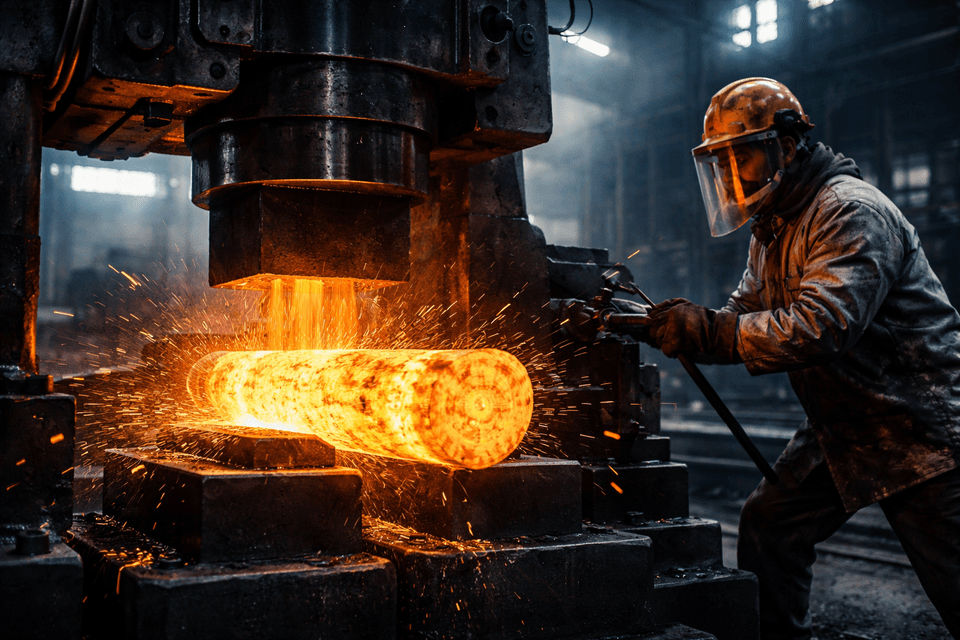
EnglishShort definitionThe forgeability of a material comprises the ability to deform the material plastically using pressure and heat without breaking it. Individual materials, such as aluminum or steel, can be forged particularly well and thus processed into geometrically complex shapes. Forgeability essentially depends on the chemical composition, the temperature and the specific processing conditions of the metal.
Dictionary
Melting temperatureThe melting temperature is the temperature at which the solid state of a material changes to the liquid state. It essentially depends on the chemical composition and structure of the material and is measured in degrees Celsius (°C) or Kelvin (K). Especially in environments where high thermal stability is required, the melting temperature must always be taken into account. The melting temperature is also an important indicator for all manufacturing and joining processes, such as welding or forging.
Dictionary
FluidityFluidity describes the ability of a material to deform or flow under certain conditions. In the manufacturing industry, flowability is crucial for processes such as casting, injection molding and extrusion, as it influences the formability and surface quality of the end product. High flowability allows the material to be evenly distributed in complex shapes and reduces the occurrence of defects such as shrinkage cavities or cracks. From an academic point of view, flowability depends on factors such as temperature, viscosity and shear stress. In practice, optimizing flowability is essential to ensure efficient production processes, enable material savings and maximize product quality, which ultimately strengthens a company's competitiveness.
Dictionary
Impact strengthImpact strength describes the ability of a material to withstand impact loads or sudden forces without breaking or permanently deforming. It is usually determined using test methods such as the Charpy or Izod impact test, in which the energy that a material absorbs at break is measured. In the manufacturing industry, impact strength is decisive for the selection of materials in safety-relevant applications, such as vehicle components or machine components that are exposed to high mechanical loads. High impact strength ensures the reliability and durability of products under changing load conditions, which helps to reduce failures and increase safety.
Dictionary
weldabilityThe weldability of a material is its ability to be permanently joined by one of the welding processes. The material is particularly suitable if there are no subsequent restrictions in terms of mechanical or physical properties, especially at the weld seam. Many types of steel and aluminum, for example, are very suitable for welding as they have a favorable chemical composition as well as a good microstructure and thermal resistance. Good weldability is important for joining several components in the long term
Dictionary
BlankA blank is a semi-finished product that is created after the primary machining process and serves as the starting material for further production. In industrial production, the blank forms the basis for various downstream processing steps such as machining, shaping or surface treatment. Blanks can come in different shapes and materials, for example as metal ingots, plastic granules or blocks of wood, depending on the desired end product. The quality and precision of the blank are crucial for the efficiency and accuracy of the subsequent production steps, as they form the basis for the dimensional accuracy and technical properties of the finished product. By using standardized blanks, production processes can be optimized and costs reduced, thereby increasing competitiveness in the manufacturing industry.
Dictionary
Fatigue strengthFatigue strength is the ability of a material to withstand repeated loading during operation without failure. It is calculated from the fatigue, the material properties and the real operating conditions. The fatigue strength can be predicted in advance using various tests and simulations. High fatigue strength has a positive effect on reliability and durability, which is particularly important in the automotive and aviation sectors as well as in mechanical engineering.
© assemblean 2026 | All rights reserved.