Dictionary
Dictionary
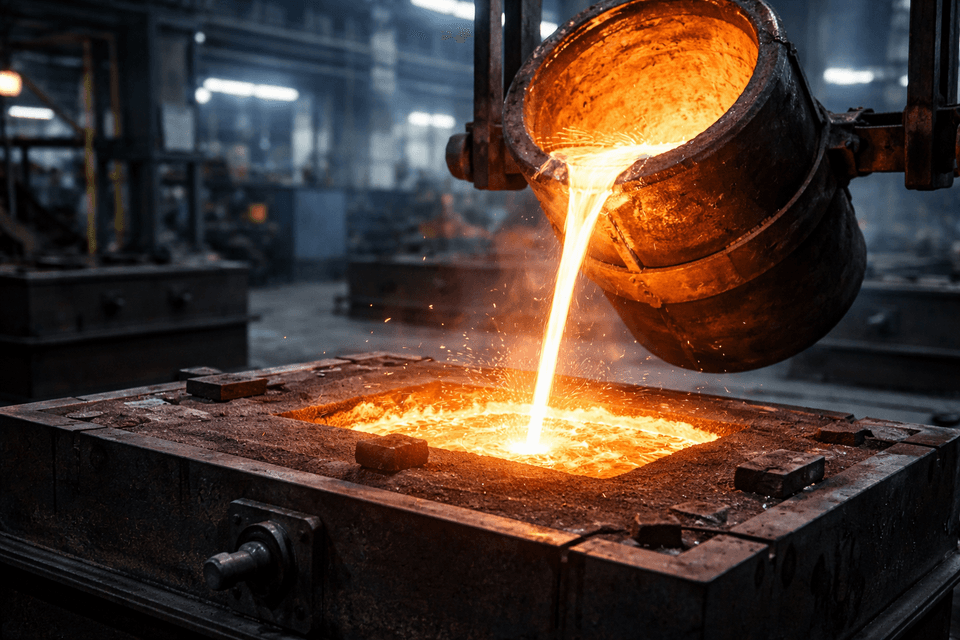
EnglishShort definitionSolidification refers to the physical process in which a material changes from a liquid to a solid state. In manufacturing technology, solidification is particularly important in casting processes, where molten metal is poured into molds and then cooled to obtain the desired shape and structure. This process significantly influences the mechanical properties and microstructure of the end product. Precise control of the solidification process is essential to avoid material defects such as blowholes or cracks and to ensure the quality of the manufactured components. By understanding and optimizing the solidification process, manufacturers can increase efficiency and optimize material usage.

Dictionary
The casting radius is an important factor when planning castings in order to avoid cracks, fractures and other limitations of the casting. The casting radius includes all corners and edges of a casting that are created during the manufacturing process. The better the casting radius is selected for the respective part, the higher the material flowability as well as the removal of the parts from the mold. In order to implement precise casting radii during production, it is necessary to record these in the technical drawings using minimum and maximum radii. Well-chosen casting radii can significantly improve the service life and reliability of components.
Dictionary
cavityIn modern mechanical engineering, the production of precise and high-quality components plays a central role. One of the key technologies for manufacturing such components is injection molding, a process that is used in numerous industries from automotive to medical technology. An essential part of this process is the cavity in the injection molding tool. But what exactly is behind this concept, and what is the importance of the cavity for the quality and efficiency of production? This article provides a comprehensive insight into the world of cavities in mechanical engineering, explaining their function, design and practical applications, as well as future developments in this field.
Dictionary
FluidityFluidity describes the ability of a material to deform or flow under certain conditions. In the manufacturing industry, flowability is crucial for processes such as casting, injection molding and extrusion, as it influences the formability and surface quality of the end product. High flowability allows the material to be evenly distributed in complex shapes and reduces the occurrence of defects such as shrinkage cavities or cracks. From an academic point of view, flowability depends on factors such as temperature, viscosity and shear stress. In practice, optimizing flowability is essential to ensure efficient production processes, enable material savings and maximize product quality, which ultimately strengthens a company's competitiveness.
Dictionary
Injection MoldingInjection molding is a manufacturing process in which molten material - usually plastic or metal - is injected into a mould or tool under high pressure. This process is mainly used in plastics and metal processing to produce precise and complex components in large quantities. Injection allows detailed shapes to be produced with tight tolerances and consistent quality, which is essential for series production. The technology enables efficient production processes, reduced material waste and quick changeover between different product variants. In industry, injection plays a central role in the production of components for the automotive, electronics, consumer goods and many other sectors. The optimization of the injection process contributes significantly to the competitiveness and innovative capacity of manufacturing companies.
Dictionary
SprueThe sprue is an essential part of the casting process in metal and plastics processing. It acts as a connection between the melting cup and the casting mold, allowing the liquid metal to be fed into the mold in a controlled and uniform manner. Precise design of the sprue prevents casting defects such as shrinkage cavities or uneven material distribution, which increases the quality and stability of the end product. In industry, an efficient sprue makes a significant contribution to optimizing production processes and reducing reject rates. The sprue is therefore a decisive factor for economic efficiency and reliability in the casting process.
Dictionary
Subtractive manufacturingSubtractive manufacturing refers to a manufacturing process in which material is removed from a blank using various techniques such as turning, milling or drilling to form the desired end product. This process is widely used in the metal, plastics and wood industries. It enables the precise production of complex components with tight tolerances and high surface quality. Subtractive manufacturing is essential for series production, prototyping and customization in manufacturing technology. By using modern CNC machines (computerized numerical control), efficiency and accuracy can be further increased, making companies more competitive.
© assemblean 2026 | All rights reserved.