Dictionary
shear modulus (G-modulus)Dictionary
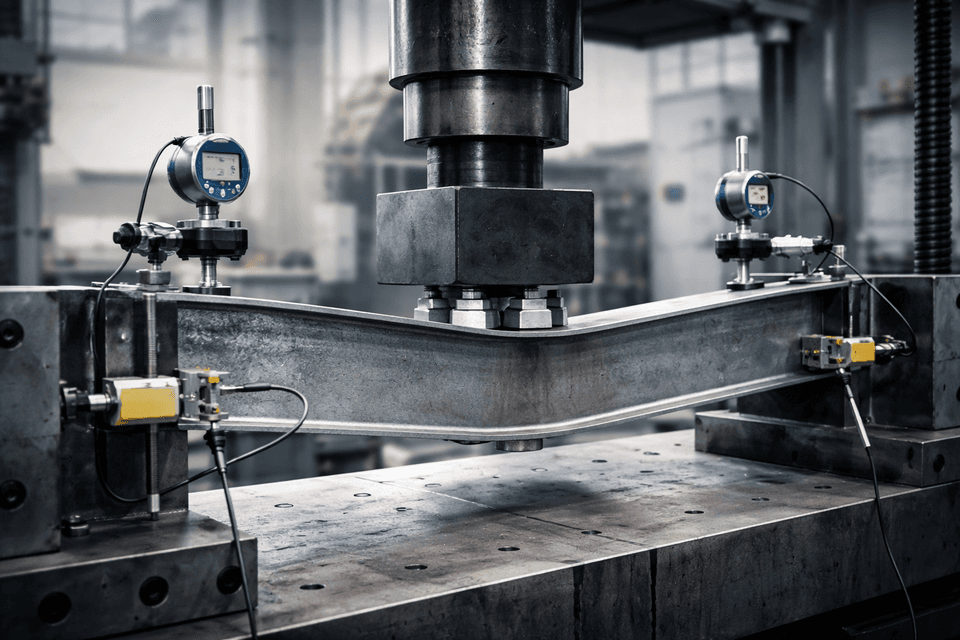
EnglishShort definitionThe modulus of elasticity (E-modulus) describes the deformability of a material. This determines the material's ability to deform elastically under load. The higher the modulus of elasticity, the greater the stiffness, meaning the material is less able to deform. Typical stiff materials are often certain types of steel. The E-modulus is measured in Pascal (Pa) and is a fundamental measurement for all mechanical engineering designs.
Dictionary
shear modulus (G-modulus)The shear modulus (G-modulus) is a measure of the deformation capacity when the component is under shear load. In the linear-elastic range, the shear modulus describes the relationship between the shear stress and the shear deformation. Materials with a high shear modulus are particularly resistant to changes in shape under shear loads. The shear modulus is measured in pascals (Pa) and is an important determinant in mechanical engineering.
Dictionary
ElasticityElasticity is the ability of a material to return to its original shape when the deformation is removed by a released load. Elasticity is typically measured by the Young's modulus, which expresses the relationship between stress and strain. Materials with high elasticity, such as rubber, can return to their original shape even after high stress or deformation without compromising their mechanical properties.
Dictionary
StiffnessStiffness describes the property that a material can resist permanent deformation even under load. This is determined, for example, by the modulus of elasticity or G-modulus. Stiffness is an important indicator of the stability and functionality of components, as materials with a high stiffness retain their original shape even under heavy loads.
Dictionary
Impact strengthImpact strength describes the ability of a material to withstand impact loads or sudden forces without breaking or permanently deforming. It is usually determined using test methods such as the Charpy or Izod impact test, in which the energy that a material absorbs at break is measured. In the manufacturing industry, impact strength is decisive for the selection of materials in safety-relevant applications, such as vehicle components or machine components that are exposed to high mechanical loads. High impact strength ensures the reliability and durability of products under changing load conditions, which helps to reduce failures and increase safety.
Dictionary
FluidityFluidity describes the ability of a material to deform or flow under certain conditions. In the manufacturing industry, flowability is crucial for processes such as casting, injection molding and extrusion, as it influences the formability and surface quality of the end product. High flowability allows the material to be evenly distributed in complex shapes and reduces the occurrence of defects such as shrinkage cavities or cracks. From an academic point of view, flowability depends on factors such as temperature, viscosity and shear stress. In practice, optimizing flowability is essential to ensure efficient production processes, enable material savings and maximize product quality, which ultimately strengthens a company's competitiveness.
Dictionary
MagnetizabilityMagnetizability describes the ability of a material to develop its own magnetic properties under the influence of an external magnetic field. Materials such as iron, nickel and cobalt, some of which retain their magnetic properties even after the external magnetic field has been removed, are particularly suitable for this process. The magnetizability of a material is characterized by its permeability. High magnetizability makes materials particularly interesting for electrical engineering or magnetic bearings.
© assemblean 2026 | All rights reserved.