Dictionary
Dictionary
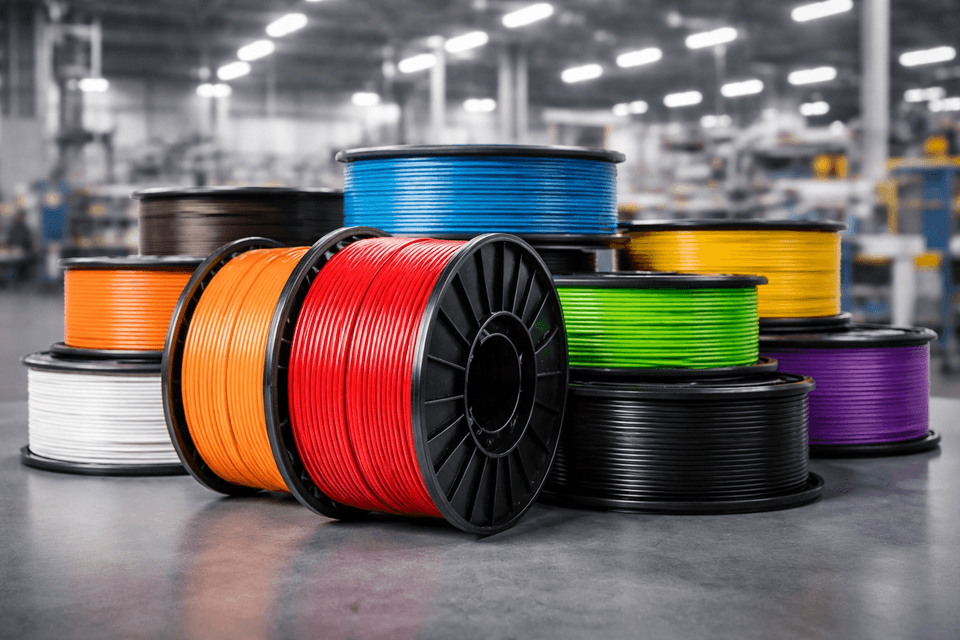
EnglishShort definitionFilaments is a long, thin strand of material that is used in additive manufacturing, particularly in 3D printing. It often consists of thermoplastics such as PLA, ABS or PETG, which are melted through an extrusion process and applied in layers to create three-dimensional objects. In industrial manufacturing, filament enables the precise and cost-efficient production of complex components and prototypes. The material properties of the filament, such as strength, flexibility and temperature resistance, directly influence the quality and functionality of the manufactured products. Therefore, the selection of the appropriate filament type is crucial for the efficiency and reliability of production processes in the modern manufacturing industry.

Dictionary
Additive manufacturing is an innovative manufacturing process in which material is added layer by layer to create three-dimensional objects. This approach enables the production of complex geometries and customized components that are often not feasible with traditional manufacturing methods. In industry, additive manufacturing is used to create prototypes quickly, shorten production times and increase material efficiency. It also offers flexibility for design adjustments without additional tooling costs, making development and production more agile. By reducing waste and optimizing the use of materials, additive manufacturing contributes to sustainable production and strengthens the competitiveness of companies in a wide range of industries.
Dictionary
SLS (laser sintering)SLS (laser sintering) is a 3D printing process in which plastic powder materials are fused layer by layer using a laser to produce an object. The special feature of this process is that the complex geometries can be produced without additional support structures, as the unprocessed powder already serves as a support. SLS is particularly suitable for industrial purposes such as advanced prototypes and small series, as the manufactured products are very durable and rich in detail. In most cases, the technology is somewhat more expensive, but makes it possible to achieve high mechanical requirements.
Dictionary
SLA (stereolithography)The SLA (stereolithography) process is a special 3D printing process in which 3D models are created by curing liquid photopolymer resin layer by layer with a UV laser. The advantage of this process is that very smooth surfaces can be produced thanks to the high precision. The process is useful for detailed parts in prototype construction or for small parts. In contrast to other 3D printing processes, SLA is one of the slower ones, which is due to the superior level of detail. Depending on the resin, the product from SLA printing can differ in terms of flexibility, strength or temperature resistance.
Dictionary
DXF fileThe DXF file is a special CAD file format that enables the exchange of 2D and 3D drawing data between CAD programs. The file format can capture information, texts and other details of a drawing and is therefore often used in architecture, mechanical engineering or graphic design. DXF files are platform-independent and therefore enable smooth transfer between different programs. Geometric shapes supported by the format include circles, lines and arcs, making the format particularly suitable for sheet metal working to place parts on a sheet.
Dictionary
STEP fileA STEP file is a specific file format that is used in particular for transferring and saving 3D models and CAD data and is primarily used in industry and mechanical engineering. Technical data such as geometric and functional information can be exchanged without loss. STEP files are saved in the same format regardless of the CAD program and can therefore be easily transferred between design and manufacturing systems, thus promoting interoperability between these systems. The format is defined in the ISO 10303 standard.
Dictionary
Impact strengthImpact strength describes the ability of a material to withstand impact loads or sudden forces without breaking or permanently deforming. It is usually determined using test methods such as the Charpy or Izod impact test, in which the energy that a material absorbs at break is measured. In the manufacturing industry, impact strength is decisive for the selection of materials in safety-relevant applications, such as vehicle components or machine components that are exposed to high mechanical loads. High impact strength ensures the reliability and durability of products under changing load conditions, which helps to reduce failures and increase safety.
© assemblean 2026 | All rights reserved.