Dictionary
Surface roughnessDictionary
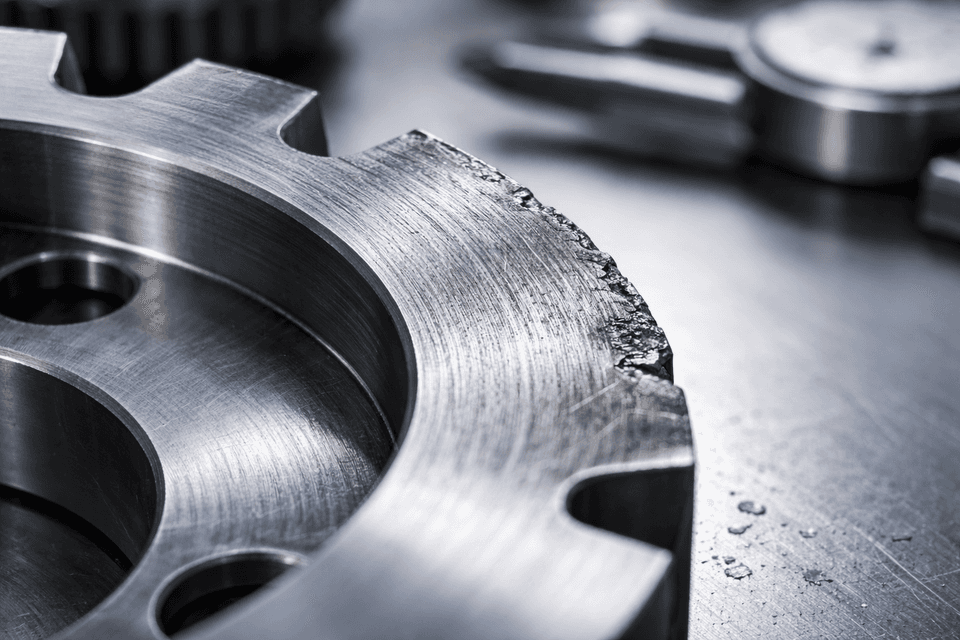
EnglishShort definitionAbrasion refers to the loss of material that occurs on surfaces due to mechanical effects such as abrasion or friction. This often occurs in moving parts and in the manufacture of parts where they come into contact with each other or with fixed surfaces. As abrasion can result in a loss of surface quality or properties, abrasion affects the service life of components. The severity of abrasion depends on the choice of material, among other things, and can be reduced by coatings.
Dictionary
Surface roughnessSurface roughness measures the unevenness and texture of a surface at the smallest level. It is mainly measured by the height differences on the surface and is given in micrometers (µm). The mechanical properties strongly depend on the surface roughness as it influences friction, wear and functionality. Therefore, choosing the right surface roughness is also important for manufacturing processes such as CNC machining. The roughness is often improved by various finishing processes such as grinding and polishing.
Dictionary
WearSimilar to abrasion, wear is a gradual loss of material on the surface of components. It can be caused by several factors, including friction, abrasion or corrosion. Wear resistance is primarily influenced by material hardness, surface condition and lubrication. The choice of the right tools, lubricants and coolants is therefore essential, especially in manufacturing, in order to minimize the effects of wear and thereby extend the service life of components, tools and machines.
Dictionary
Surface qualityThe surface quality includes all properties and the quality of a component's surface. For example, roughness, waviness and density are taken into account. The surface quality can be measured using methods such as stylus devices and optical methods and specified in micrometers (µm). The higher the surface quality, the smoother and more uniform the surface. The surface quality is primarily determined when high demands are placed on the functionality of the surface or on optical components.
Dictionary
SolidificationSolidification refers to the physical process in which a material changes from a liquid to a solid state. In manufacturing technology, solidification is particularly important in casting processes, where molten metal is poured into molds and then cooled to obtain the desired shape and structure. This process significantly influences the mechanical properties and microstructure of the end product. Precise control of the solidification process is essential to avoid material defects such as blowholes or cracks and to ensure the quality of the manufactured components. By understanding and optimizing the solidification process, manufacturers can increase efficiency and optimize material usage.
Dictionary
BlankA blank is a semi-finished product that is created after the primary machining process and serves as the starting material for further production. In industrial production, the blank forms the basis for various downstream processing steps such as machining, shaping or surface treatment. Blanks can come in different shapes and materials, for example as metal ingots, plastic granules or blocks of wood, depending on the desired end product. The quality and precision of the blank are crucial for the efficiency and accuracy of the subsequent production steps, as they form the basis for the dimensional accuracy and technical properties of the finished product. By using standardized blanks, production processes can be optimized and costs reduced, thereby increasing competitiveness in the manufacturing industry.
Dictionary
HardeningHardening refers to the process of targeted strengthening of materials, particularly metals and plastics. Thermal or chemical processes are used to improve the mechanical properties of the material by strengthening its structure. In industrial production, hardening is used in the manufacture of components that require increased strength and wear resistance, such as in the automotive or mechanical engineering industries. This process is crucial to ensure the durability and reliability of products. In addition, curing enables the optimization of material properties, which increases both the performance and safety of the end products. Overall, curing makes a significant contribution to quality assurance and increased efficiency in the manufacturing industry.
© assemblean 2026 | All rights reserved.