
01
Close mould (lock tool)
The two halves of the mould are closed and held tightly with high clamping force. This ensures the mould stays sealed and stable during injection.
Production Service
How are precise metal components produced by die casting, and when does the method become economically viable? Here you will find essential information on the process, hot- and cold-chamber techniques, typical metals (e.g. aluminium, zinc, magnesium), quality, post-processing, and cost considerations. Especially suited for medium to high volumes: assemblean supports you from feasibility studies through reliable execution via qualified manufacturing partners.
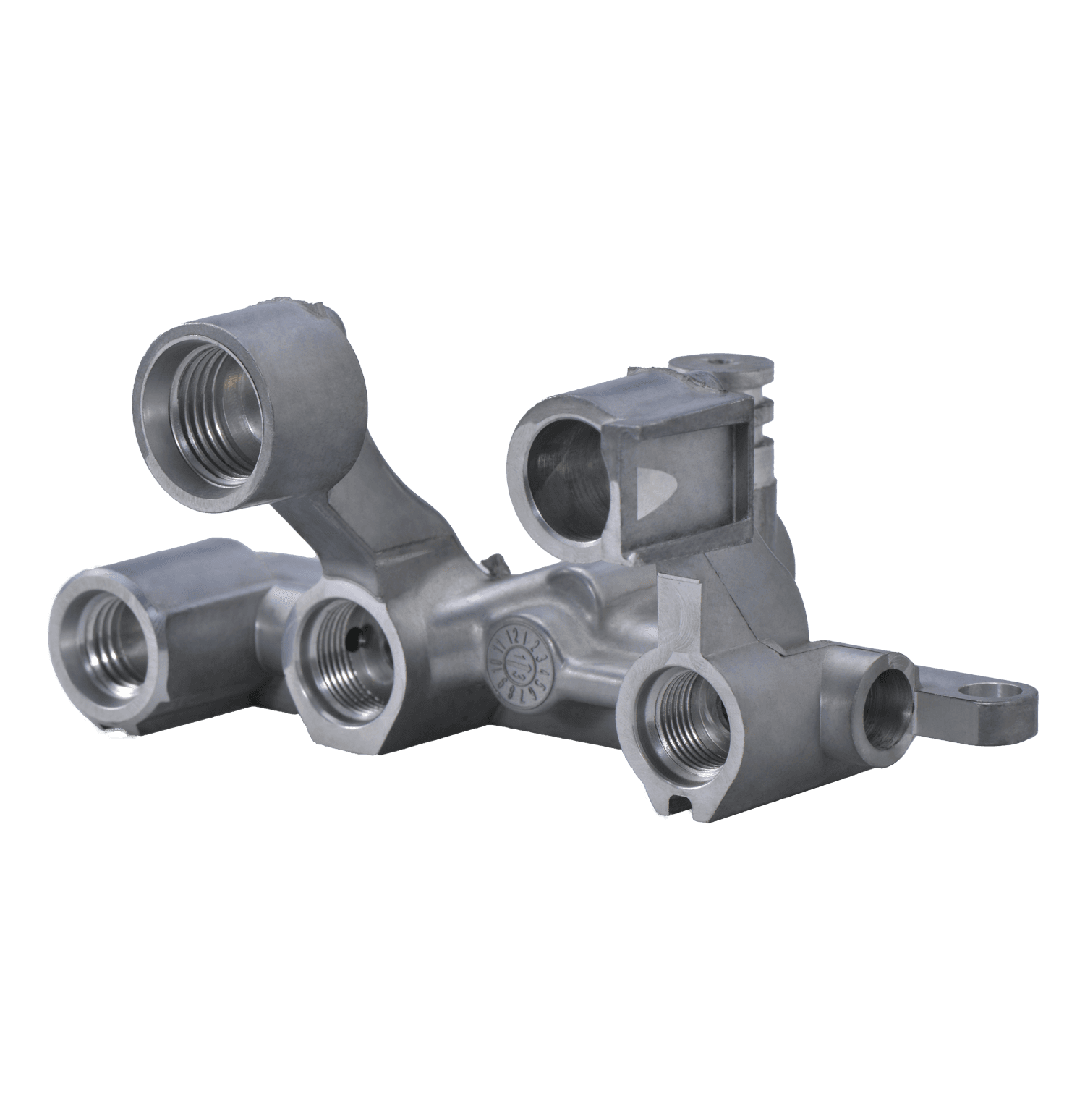
Service overview
Die casting is a process where molten metal is forced under high pressure into a precise metal mould (die casting mould) and solidifies there. The mould is clamped with high force, allowing even complex geometries to be reproducibly produced—often with short cycle times.
Typical strengths of die casting include excellent series production capability (efficient manufacture from medium to high volumes), often high dimensional accuracy and repeatability, as well as surface finishes that can be used directly or enhanced by post-processing/coating. Die casting is not a "material" but a process: depending on the application, aluminium, zinc, or magnesium alloys are commonly used.
In contrast, permanent mould casting (kokill casting) typically involves low or no injection pressure into a metallic permanent mould, resulting in different filling mechanics and solidification conditions. This affects properties such as porosity and surface finish depending on the component.
Investment casting often involves longer lead times and higher piece costs but is also used for series production.
Generally, "casting" refers to methods where metal is poured into a mould and solidifies. "Die casting" is a special casting variant where the mould filling occurs under high injection pressure, typically with metallic permanent moulds and high series capability.
The graphic illustrates the cold-chamber die casting process flow.
Guide
In die casting (using the cold-chamber example), molten metal is pressed into a closed mould where it solidifies and is subsequently removed as a raw part. The typical process consists of four steps:
The two halves of the mould are closed and held tightly with high clamping force. This ensures the mould stays sealed and stable during injection.
Molten metal is injected into the mould at high speed and pressure. The objective is to completely fill the cavity before the metal prematurely solidifies at critical areas.
The metal solidifies inside the closed mould. Cooling (mould temperature control) influences cycle time, dimensional accuracy, and the likelihood of typical casting defects.
After adequate solidification, the mould opens and ejector pins push the casting out. Gating and overflow regions may remain attached to the part.
Comparison
| Criterion | Hot-chamber die casting | Cold-chamber die casting |
|---|---|---|
| Typical metals | Mainly zinc and, in some cases, other low-melting alloys | Mainly aluminium, plus magnesium and copper alloys |
| Principle | The injection system sits in the melt bath; metal is taken directly and injected | The melt is held in a separate furnace, dosed into the shot chamber, and then injected |
| Cycle time | Usually very short with high output | Typically longer because of the extra dosing step and higher temperatures |
| Advantages | High productivity, good repeatability, and often very good surface quality | Suitable for higher-melting or more reactive alloys, especially aluminium; larger parts are possible |
| Limits | The alloy must be chemically and thermally compatible with the immersed unit; corrosion and system attack are limiting factors | More process steps, often higher energy and handling effort; oxide and air entry must be controlled carefully |
| Typical use cases | Precise serial parts, often small to medium-sized components with tight tolerances and good surface finish | Aluminium die-cast parts in medium to large series, often larger components or structural parts |
| Typical industries | Hardware, mechanisms, housings, and precision small parts | Housings, brackets, carriers, structural parts, and heat sinks depending on the design |
Classical high-pressure die casting primarily distinguishes between hot-chamber and cold-chamber methods. Both follow the principle of pressing metal under pressure into a mould but differ where the molten metal is located and how it enters the mould.
This directly affects cycle times, material choices, component size, and process stability.
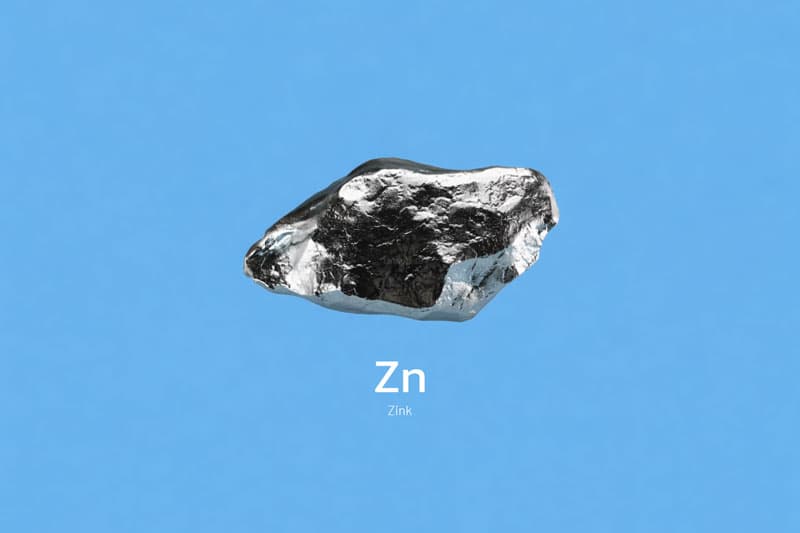
Hot-chamber means the injection system is immersed directly in the molten metal. This greatly enhances productivity by allowing quick, stable dosing without external transfer.
For this to work reliably, the molten metal must be compatible with the unit's components (e.g. plunger, injection chamber) to avoid corrosion or excessive wear.
Zinc alloys, which have lower melting points than aluminium, are well-suited to hot-chamber systems, resulting in short cycle times, excellent reproducibility, and often very high surface quality.
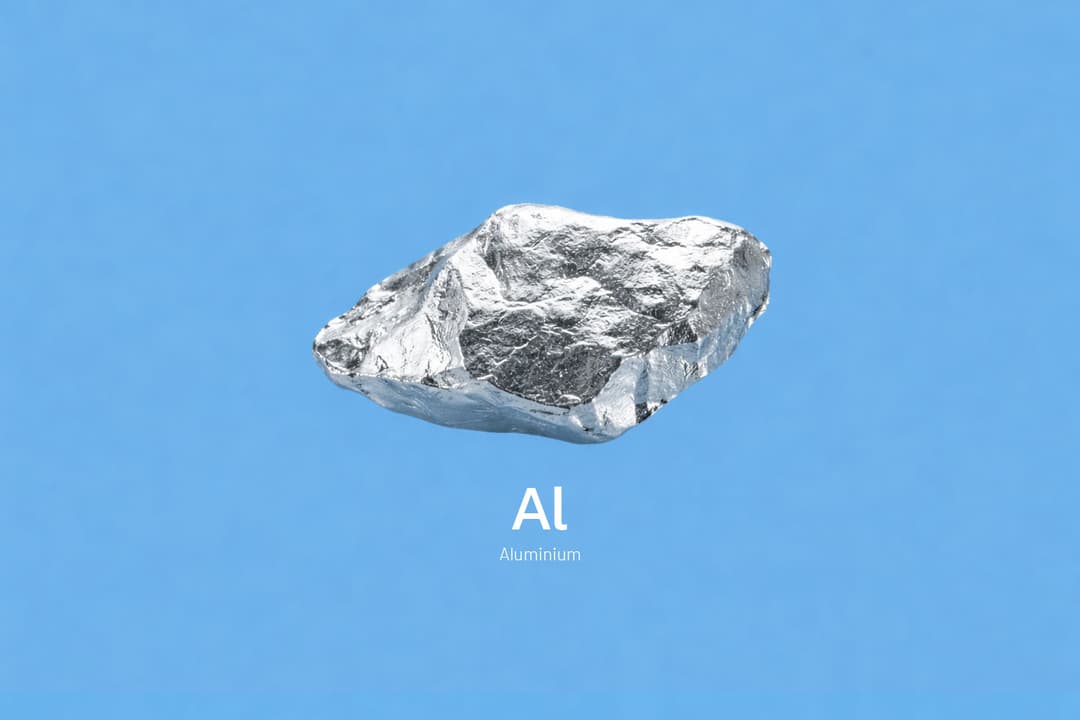
Aluminium alloys require much higher temperatures and can impose greater stress on injection systems immersed in the melt permanently. Oxide formation is a significant concern, necessitating controlled melt handling.
Thus, aluminium is typically processed using cold-chamber die casting: molten metal is kept in a separate furnace, portioned, then injected. Although this adds complexity per cycle, it is more material-robust and scalable to larger components.
Process
A clear flow, one point of contact, and a well-coordinated manufacturing process.
Request your quote online or via email. We review your drawings and technical data.
If desired, we provide feedback on die casting design. Together, we work on the best manufacturable solution.
Once the final design is set, you receive a conclusive offer for your order.
assemblean manages the entire manufacturing process, performs quality control, and delivers your parts to the requested location.
Non-ferrous metals dominate die casting. Suitable alloys depend on component requirements like weight, strength, dimensional accuracy, surface, corrosion resistance, quantity, and cost. Aluminium, zinc, and magnesium are the most common.
We also offer stainless steel, brass, and silicon tombac. Need a specific alloy not listed? No problem— we collaborate to produce your parts in your desired material.
Aluminium offers very high thermal conductivity, process stability, and excellent corrosion and weather resistance. Aluminium die casting enables complex parts with thin walls. Common alloys include:
Magnesium alloys have lower hardness and strength than comparable aluminium alloys, with high elongation and good castability. Due to heat resistance, they are used especially in automotive engine compartments. Common alloys are:
Zinc alloys are preferred for high-quality, dimensionally stable castings with tight tolerance demands. Their high melting point makes them suitable for high-temperature applications and they are good electrical and thermal conductors. Common alloys include:
Custom parts from your chosen material — we procure all materials and alloys you require.
We offer a wide range of surface treatments tailored to your design and functional requirements.
As your reliable partner, we handle the entire order from tooling, production, to timely delivery of your die-cast parts.
During production, dimensional accuracy of components is monitored. Our on-site experts ensure highest quality standards with thorough final inspection of all parts.
For finishing and wear and corrosion protection, we provide various surface treatments including:
References


Examples
Die casting is used where series-capable metal components with good repeatability, stable quality, and economic production are required. Depending on material (aluminium, zinc, magnesium), component geometry, and surface or tolerance demands, die casting suits diverse products. Typical, neutral examples include:
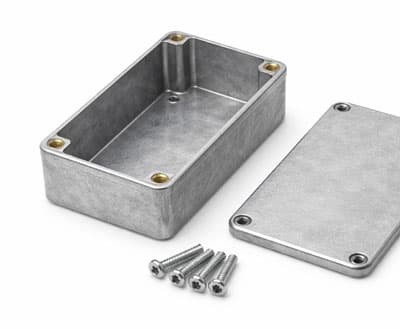
e.g. electronic housings, protective covers, or functional enclosures where dimensional accuracy, stability, and clean surface appearance are critical.
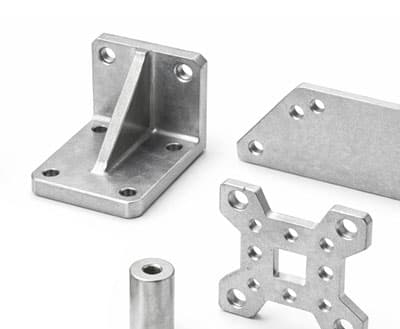
e.g. carriers, brackets, fastening elements, or structural parts requiring robust geometry and reproducible mounting points.
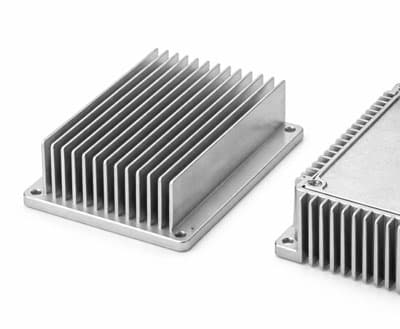
e.g. for electronics or power components where heat dissipation and series production are desired (post-processing can be applied depending on design).
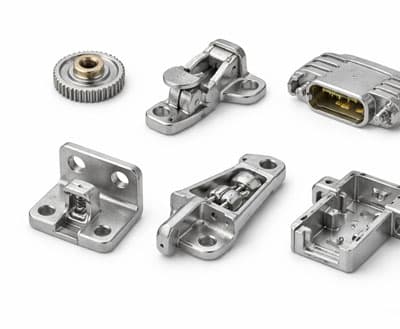
e.g. mechanical parts or small functional pieces with fine contours where superb surface finish and tight tolerances matter.
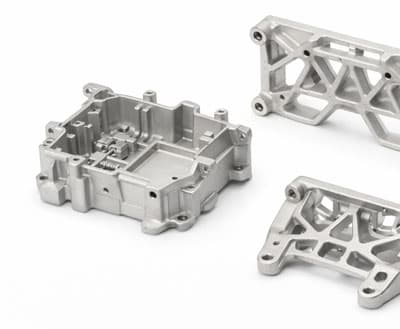
e.g. housings or carriers designed for weight reduction with early consideration of corrosion protection/coating.
Die casting can produce highly reproducible results; however, dimensional accuracy, surface finish, and scrap rate strongly depend on component design, tooling, and stable process parameters. Typical defect patterns should be understood early and addressed design- or process-wise:
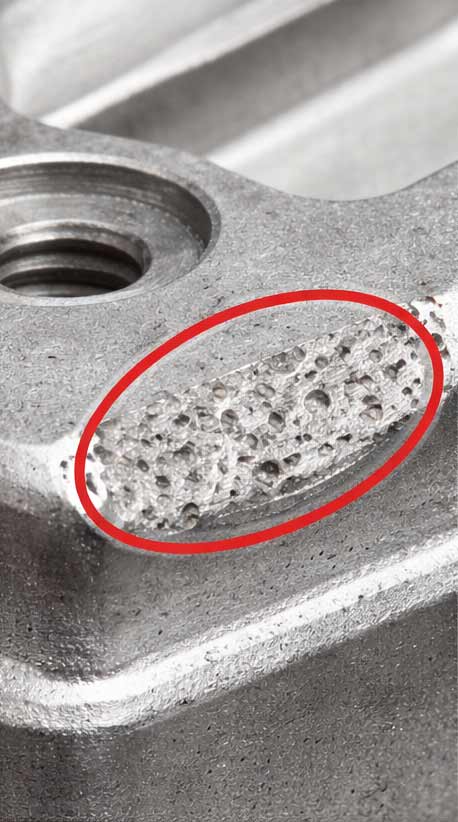
Cause: Entrapped air/gas or shrinkage cavities during solidification, often influenced by venting, gating and overflow design, wall thickness transitions, and solidification direction.
Countermeasure: Optimise gating, runners, and venting; adjust process parameters (fill speed/pressure/temperatures); and apply design improvements such as more uniform wall thickness or targeted feeding and solidification control.
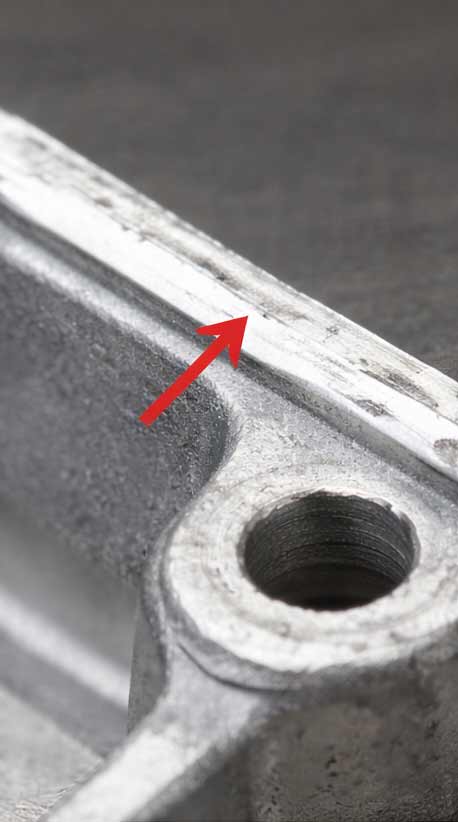
Cause: Metal escapes at parting lines due to tool wear, unfavourable parting line location, excessive load, or insufficient mould locking/support.
Countermeasure: Tool optimisation (parting line, fits, slider guidance), maintenance/wear management, stable process settings; followed by targeted deburring and trimming if needed.
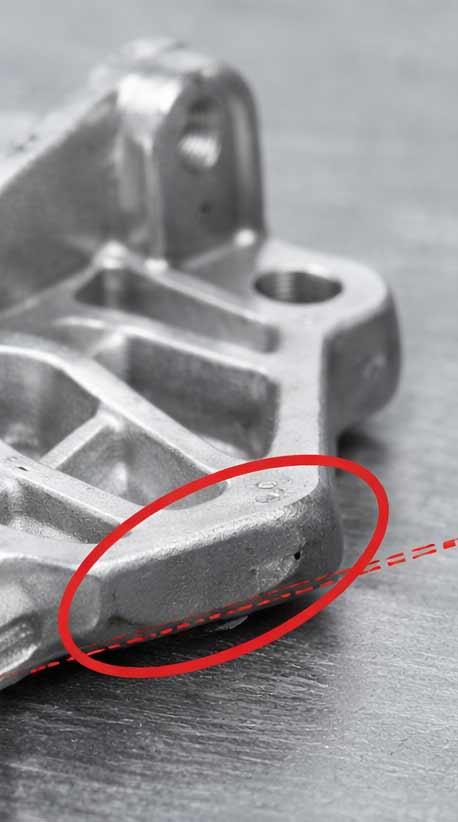
Cause: Uneven cooling/shrinkage, asymmetric geometries, or internal stresses – often worsened by large wall thickness differences and unfavourable ejector/demoulding.
Countermeasure: Harmonise wall thicknesses, integrate stiffening ribs sensibly, balance tooling cooling/temperature control, and optimise demoulding/ejector setup; apply defined post-processing on functional surfaces if required.
Depending on component requirements, quality is typically secured via a combination of visual inspection (surface, burrs, optical defects), dimensional checks (measurement tools, gauges, 3D measurement where applicable), and sample-based process monitoring.
For critical applications, further tests such as leak tests or other non-destructive methods are advisable—inspection scope depends on function, risk, and specifications.
Many die cast parts are usable as-cast, but post-processing and surface finishing are key depending on functional and aesthetic requirements. Typical steps include deburring/removing gating for safe handling and assembly, blasting or tumble finishing for uniform surface appearance, and mechanical processing such as drilling, reaming, or threading to ensure functional surfaces and fits.
For appearance and protection, painting or powder coating, and other corrosion protection coatings are common—especially for moisture, outdoor use, or aggressive environments.
Coatings or paint finishes can be organised through qualified partners if needed.
Guide
Die casting becomes cost-effective when tooling costs are amortised over an appropriate volume and the process runs stably in series. Unit costs decrease with volume since many efforts (tooling, process setup, sample approval) are initial fixed costs distributed over the production run.

Tooling, mould making, and potentially slides/mechanics are usually the largest upfront cost. Complexity increases initial cost.

Geometries with slides, undercuts, many details, or strict demoulding requirements increase effort and risk.

Tight tolerances, leak-tightness, special surface finishes, or testing requirements add costs—often due to additional process control and post-processing.

Deburring is commonly standard; extra processing (threads, sealing surfaces) or coatings/painting increase per-piece costs.

Higher volumes improve cost distribution of tooling and setup—often the decisive factor for economic feasibility.
Aluminium, zinc, and magnesium differ in material cost, process management, and post-processing needs; suitable choice depends heavily on component function and environment.
Die casting is typically justified for series production volumes where the component benefits from reproducibility and short cycle times, and a metallic solution with good dimensional accuracy and high-quality surface is required.
For very low quantities or frequently changing geometries, alternative methods may be preferable. Die casting excels when the design is stable and efficient serial production is achievable.
Planning a die cast part and want to check early if the process suits your volumes, tolerances, and surface specs?
Contact us and start your die casting project with assemblean
Comparison
| Criterion | Die casting | Injection moulding |
|---|---|---|
| Material | Metals such as aluminium, zinc, and magnesium | Plastics, both thermoplastics and thermosets |
| Temperature and process | Molten metal is processed in metallic tooling | Molten plastic is processed in temperature-controlled tooling |
| Tooling and investment | Tooling is designed for high thermal and mechanical loads | Tooling focuses on material flow, cooling, and demoulding |
| Economics | Becomes more economical as volume rises and is especially suitable for serial metal parts | Becomes more economical as volume rises and is especially suitable for serial plastic parts |
| Post-processing | Typical steps include deburring and gate removal, plus additional machining or surface work when required | Often less mechanical rework; deburring or finishing depends on the part |
| Typical applications | Load-bearing or robust metal components and other structural or functional parts | Functional plastic parts with high design freedom and complex geometries |
For a detailed comparison with guidance: Injection Moulding vs Die Casting – What Are the Differences?
To reliably manufacture die cast parts and maintain stable quality in series, key design principles should be considered early. Practically, this starts with adequate draft angles to facilitate demoulding while reducing tool wear and burr formation.
Also critical are uniform wall thicknesses, as abrupt thickness changes increase risks of porosity and distortion; smooth transitions and designs that promote controlled solidification help.
Instead of sharp edges, fillets are advised to reduce stress concentrations and support metal flow and solidification. Ribs often provide added stiffness, ideally designed to stabilise without excessive material.
At the same time, demoulding and parting lines should be considered early: orientation, ejector surfaces, and parting lines affect not only aesthetics and function but also post-processing and costs.
Undercuts should be minimised as they complicate tooling with sliders or mechanics significantly. Lastly, functional surfaces like fits, sealing areas, or threads should be deliberately defined, including where targeted post-processing is necessary.
For a detailed checklist with typical values, examples, and construction tips: Key Die Casting Design Guidelines.
FAQ
Die casting is a casting method where molten metal is pressed under high pressure into a metallic mould and solidifies there. This allows for series-production metallic parts with good repeatability and often excellent surface finish.
Hot-chamber die casting has the injection system in the melt, enabling very short cycle times. Cold-chamber die casting holds the melt separately and fills the casting chamber in portions—commonly standard for aluminium.
Most frequently aluminium, zinc, and magnesium. Aluminium is a versatile all-rounder, zinc suits precise parts with excellent surface finish, and magnesium is suited for lightweight constructions.
Porosity/shrinkage cavities usually arise from trapped air/gases or shrinkage during solidification. Key factors include venting, gating and overflow design, process settings, and a design with uniform wall thickness.
Typical post-processing includes removing gating and deburring. Depending on requirements, blasting, tumble polishing, creating threads or functional surfaces (e.g. sealing and fitting areas), and further machining steps are added.
Surface treatments such as blasting, tumble polishing, painting/powder coating, or corrosion protection coatings are available depending on appearance, environment, and function.
Mainly dependent on part size and complexity, number of sliders/mechanics, tolerance requirements, and expected tool life. Planned volume and quality/control requirements also affect tooling and ramp-up effort.
Both use metallic permanent moulds. Die casting forces metal in at high pressure, enabling short cycles and series production. Permanent mould casting typically uses lower pressure, leading to different process and component characteristics.
"High pressure die casting" often synonymously refers to die casting, stressing the high injection pressure that forces the melt into the mould. Practically, this means classic die casting.
Often confused with plastic injection moulding—die casting is a metal casting process. Planning a die casting project? It’s ideal for series-capable metal parts needing high repeatability, stable quality, and short cycles—typically aluminium, zinc, or magnesium.
Success depends not only on material and geometry but also tooling design, post-processing, and robust quality assurance. assemblean guides you through the entire chain—from tooling, production, to on-time delivery.
Benefits include: - ISO-certified manufacturing, - dedicated project contact, - transparent process data, and - flexible lead times from prototypes to large series. Contact us now, we look forward to collaborating!
Guide
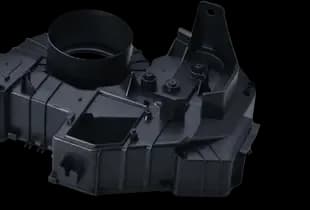
Injection moulding, 2K and multi-component injection moulding—precision parts in small and large series.
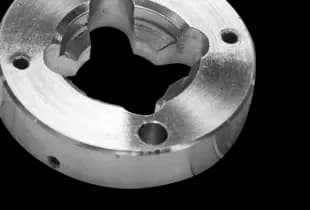
CNC milling, turning, mill-turn and drilling—from prototypes to series in all metals and plastics.
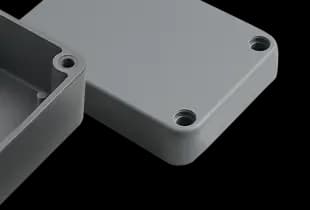
Fast, cost-effective production of premium plastic parts without costly tools and unlimited material choices.
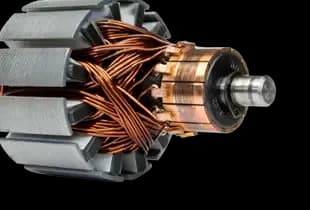
Mechanical and mechatronic assemblies—all joining technologies from manual to automated.
Surface and heat treatments and coatings for plastics and metals, from small parts to assemblies.
High-precision wire and sinker EDM for complex geometries, fine details, and tight tolerances in all conductive metals.
Knowledge hub
Die casting is a highly economic process for mass manufacturing metallic cast parts. It allows the production of complex shapes with high accuracy, thin walls, and smooth surfaces, which only [...]
Injection moulding and die casting are widely used part production methods. To select the right method for your products, you should understand the differences between injection moulding and die casting. [...]

Developing a physical product is complex. Which components need consideration in idea development? Which manufacturer suits? Is it worth pursuing my product idea? [...]
Trusted by
Book a personal meeting
Contact us now
© assemblean 2026 | All rights reserved.