
Blog entry

To the blog overview

What are assemblies? Structure, examples & importance explained

What are assemblies? Structure, examples & importance explained

Assemblies are central building blocks of modern technology – they are found in nearly every technical product you use daily. Whether it's a machine, vehicle, or electronic device: assemblies connect individual components into functional units, enabling complex systems.

What exactly is an assembly?

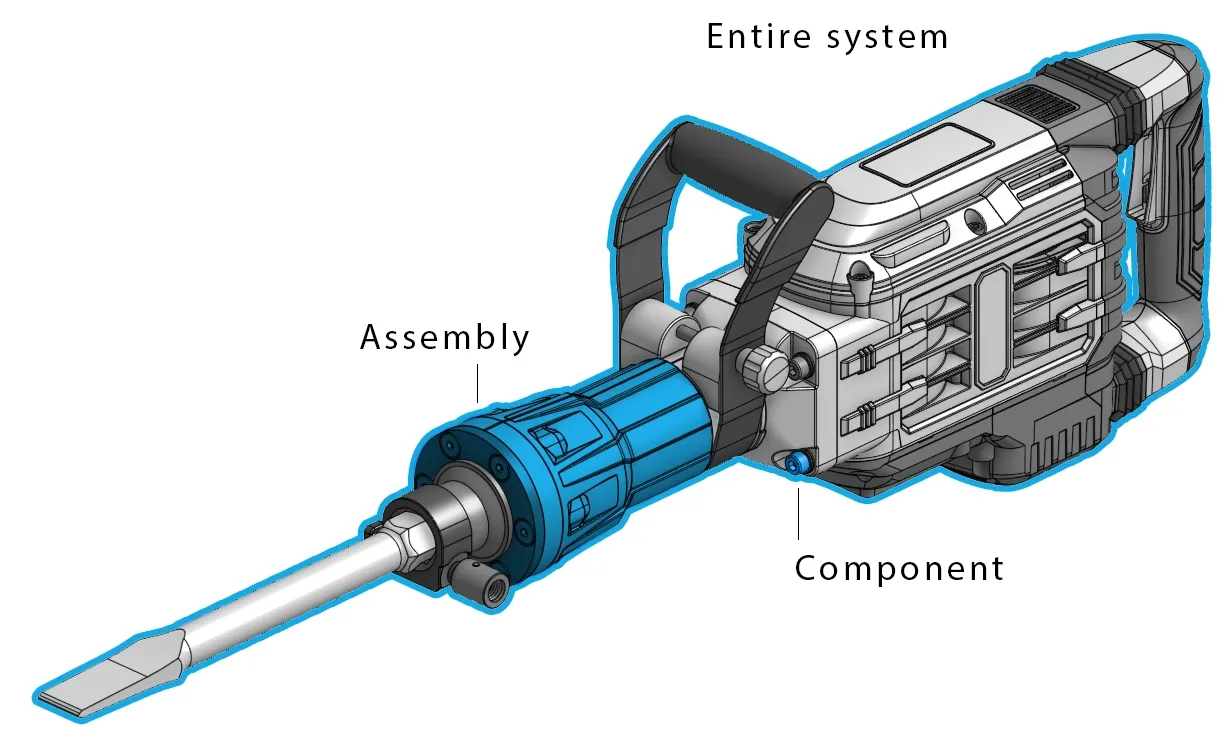
An assembly is a composite, functional component made up of several individual parts and possibly sub-assemblies. These parts are permanently or detachably connected and together form an independent unit with a clearly defined function within the overall product.

You can think of an assembly like a small module that can often be disassembled – making maintenance and replacement easier. Typical examples include gearbox modules in machines, circuit boards in electronics, or brake systems in vehicles.
How is an assembly structured?

Assemblies typically consist of:

  • Individual components (e.g., screws, gears, electronic parts)
  • Sub-assemblies that already perform partial functions (e.g., a motor or control module)
  • Connecting elements such as screws, plugs, or solder joints
assembly example

This structure usually follows a logical hierarchy: from individual part to sub-assembly to complete assembly and finally to the overall system.

Why are assemblies so important?

They enable modular product design, which brings many benefits:

  • Flexibility: Defective assemblies can be quickly replaced without needing to replace the entire device.
  • Efficiency: An assembly is pre-manufactured in production, shortening assembly time and reducing costs.
  • Quality: Each assembly can be tested individually, which detects errors early and increases reliability.
  • Scalability: Once developed, assemblies can be reused in different products.

Where do you encounter assemblies in everyday life?

They’re virtually everywhere: in household appliance controls, vehicles, machines, and medical technology. Even your smartphone contains numerous mechatronic assemblies, from the camera module to the power supply.

FAQ: Quick Answers

What is the difference between an assembly and an individual part?

→ The individual part is indivisible, the assembly consists of multiple parts and can be assembled/disassembled.

Are there different types of assemblies?

→ Yes! For example, mechanical (gears), electrical (circuit boards), or mechatronic (combinations of both).

How is an assembly documented?

→ Through a bill of materials, drawings, and possibly test reports. In CAD systems, they are managed as “assemblies.”

Assemblies – the Foundation of Modern Technology

Whether in machines, cars, or electronic household devices – they are the backbone of industrial manufacturing. They make complex technology maintainable, scalable, and efficiently producible. For companies, they mean lower costs, higher quality – and more flexibility in production.

Still Have Questions?

In our article on assembly manufacturing, you’ll learn how they are efficiently produced and assembled – from individual components to finished modules. This gives you insights into the processes behind modern production.

Of course, you can also contact us directly on this topic.